

Jacques Giès, former president of the Guimet Museum, has died.
A specialist in Buddhist art and Chinese painting, he became director of the National Museum of Asian Arts in Paris in 2008. A painter himself, he had retired to Normandy, where he passed away on April 11 at the age of 71.
A seasoned sinologist, distinguished curator, and impulsive artist, Jacques Giès was all of these things at once. As restless as he was enthusiastic, erudite and loquacious, a man of integrity rather than a strategist, this refined scholar—who served as director of the Guimet Museum in Paris from 2008 to 2011—stood out from the staid world of curators. Was it because he engaged with distant civilizations that he broke away from the museum routine? This singular spirit, a great charmer, passed away on April 11 at the age of 71 in Rouen.
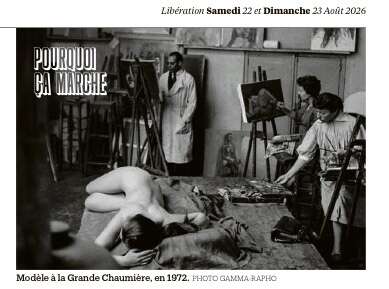
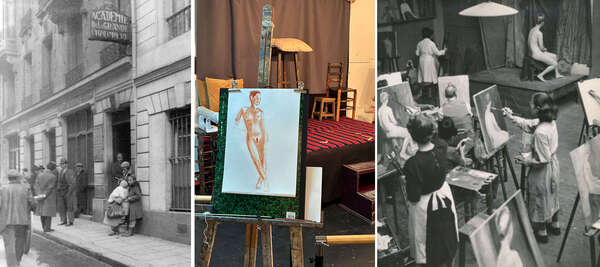
Born in Paris on January 10, 1950, Jacques Giès began training in painting and printmaking at the age of 13, notably at the Académie de la Grande Chaumière, before studying art history at the École du Louvre. While the search for his Jewish roots would occupy him throughout his life, he was above all drawn to the call of the exotic, specializing in Buddhist art as well as Chinese and Central Asian painting. From 1974 to 1998, he taught this civilization of ink and brush at the Sorbonne, then at the École du Louvre from 1998 to 2008.
He began his career in 1980 at the Guimet Museum as a curator in the China and Central Asia departments. Eleven years later, in 1991, he developed an extension to the museum: the Galleries of the Buddhist Pantheon, Japan, and China. The Heidelbach Hotel thus displays the six classes of the Buddhist pantheon, from the highest, that of the Buddhas, to the lowest, that of mortals.
© Le Monde