

The Bourdelle Museum reopens on June 22, 2021.
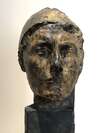
The Head of Apollo. © Monique Lauret
While we await the partial reopening of the Bourdelle Museum on June 22—Read more—we are pleased to share the text that Monique Lauret, a psychoanalyst, has kindly allowed us to reproduce.
The photo of the Head of Apollo she discusses was taken by her.
ANTOINE BOURDELLE
“You’re leaving me!” Rodin said to Antoine Bourdelle as he was sculpting the first version of his *Head of Apollo* in 1900, revealing a two-faced Janus: the right side executed in the style of his master, of whom he was a student, while the left side revealed and gave free rein to Bourdelle’s own distinctive style. The artist thus freed himself from the master of Meudon without a word and chose the singular, unfettered path of his own expression, marking a radical turning point in the evolution of his style. The beginning of a sculptor’s work of original, singular power, in movement—whether restrained or expansive to the point of monumentality. Bourdelle was also an accomplished painter with a predilection for portraiture. He would later say of his
Apollo’s head, which “embodied everything he had learned through his diligent practice of pastel.” He furthered his studies in sculpture under Rodin, with whom he shared a mutual respect; he had joined Rodin’s studio as an apprentice in 1893.
“Art is by no means a premature fruit,” says Bourdelle. “Art is an infinite, austere joy,” just like the process of subjectivation that drives separation and the assumption of a subject. The master may enslave, but the master is also the one who, through his or her transmission, guides a becoming-subject, a becoming-artist, when the teacher transcends the issues of the ego, of his or her narcissism and self-gratification, to attain the status of master. The issues of alienation and separation are found in every capacity for creation and thought.
Emile-Antoine Bourdelle (1861–1929), born in Montauban, the only son of a carpenter and cabinetmaker who designed furniture and of Emilie Reille, showed an exceptional aptitude for drawing from a very early age. An apprentice in his father’s workshop from the age of 13, he took courses in drawing and copying ancient models. Antiquity, the archaic, and mythology were his favorite subjects—an interest shared with psychoanalysis that might help explain the sublimation processes of a teenager confined to his father’s workshop. Conflicts reactivated from childhood into adolescence find an outlet in sublimation, one of the four fates of the drive according to Freud. The object and the goal are transformed in such a way that the sexual drive finds satisfaction in a non-sexualized work of higher social or ethical value: “The sublimation of drives is a particularly salient feature of the development of civilization; it is what makes it possible for higher psychic activities—scientific, artistic, ideological—to play such an important role in civilized life,”¹ he said in Civilization and Its Discontents. Freud would make sublimation—introduced in the Three Essays on the Theory of Sexuality in 1905, and by emphasizing partial drives—a late, post-Oedipal defense mechanism that asserts itself in adolescence in all its fullness; it is perhaps the last defense mechanism to develop during psychosexual development.
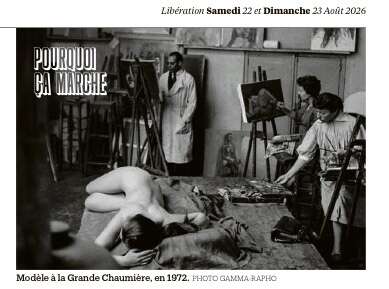
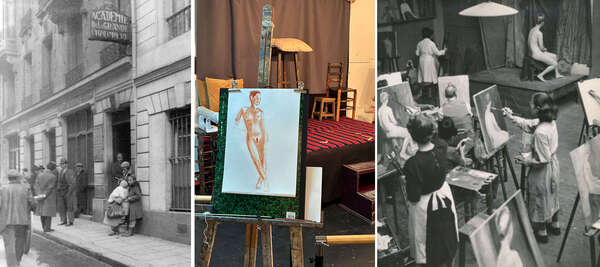
Emile-Antoine Bourdelle’s talent quickly earned him the admiration of art lovers in Montalban, and at the age of 15 he was awarded a scholarship and admitted to the École des Beaux-Arts in Toulouse, where he spent eight years in passionate solitude and a relentless drive to work. “Truth is no public courtesan; she loves solitary hearts; she consents to unveil her bosom only to our spiritual gaze,”2 he would later say in his lectures at the Académie de la Grande Chaumière. A gaze sharpened by the spirit, focused on the tragedy of the human condition forged in the solitude of work. The artist is the one who approaches and ventures as close as possible to this zone of central void and the Thing, that place where pleasure also resides and where sublimation originates. He was accepted as the runner-up in the entrance exam for the École des Beaux-Arts in Paris in 1884, at the age of 23. He would remain in Falguière’s studio for only two years, preferring the street and life to the empty teaching he had experienced there. “By the age of thirty, I must have proven myself,” he said. In 1885, he settled permanently in his studio at 16 Impasse du Maine, which today houses the museum, opened in 1949, twenty years after his death, expanded with a Grand Hall for monumental sculptures in 1961 on the centenary of his birth, and then with a new extension in 1989. It is a particularly moving place that retains the imprint of his living presence and the unique layout of his studio. His mother died in 1887. Ten years later, in 1897, his hometown, Montauban, commissioned him to create the Monument tothe Fallen Soldiers (Monument aux Morts), Combatants(Combattants) andDefenders ( ) ofthe Tarn Department ( Tarn) andGaronne Department ( Garonne), 1870–1871; this was also the year of his first exhibition in the United States. Fame came quickly following the creation of the high relief crowning the stage of the Grévin Theater in 1900 and the opening of a school in Montparnasse for the independent study of sculpture, which he founded with Rodin and the sculptor Desbois. His son Pierre, born of his first marriage to Stéphanie Van Parys, was born in 1901. He organized his first solo exhibition in 1905 at the Hébrard foundry on Rue Royale and exhibited at the Salon d’Automne. His father died the following year. He left Rodin’s studio in 1908, traveled to Poland, and received the commission for the Monument to Mickiewicz, on which he would work for twenty years. “I want volume; I absolutely want the life of my figures to emerge from deep volumes, in complete opposition to Rodin’s entire body of work.”3
The son leaves the father… Auguste Rodin, born in 1840, was 21 years his senior, yet he took his father’s name just as he was rising to fame. Was it a desire to take his father’s place or to supplant him by committing patricide? Bourdelle would find his place as a great sculptor of the 20th century. He was made a Knight of the Legion of Honor and began teaching at the Académie de la Grande Chaumière in 1909. Among his students were Alberto Giacometti, Germaine Richier, Viera Da Silva, and Otto Gutfreund. His most famous work is *Hercules the Archer*, whose tension in the drawing of the bow captivated audiences and critics alike, left an indelible mark on the century, and adorned school notebooks for decades.
This sculpture was created based on a model of a distinguished military officer, following a commission from Commander Doyen-Darigot, who died at Verdun in 1916. Inspired by the powerful musculature of this man who volunteered to pose, he turned to the legend of Hercules or Heracles, the hero who, in one of his twelve labors, exterminated the monstrous birds that had taken up residence around Lake Stymphalus. In 1910, he separated from his first wife and met his second wife, Cléopâtre Sévastos; a daughter, Rhodia, was born a year later. This was also the period when he designed the façade and oversaw the interior and exterior decoration of the Théâtre des Champs-Elysées project commissioned by Gabriel Thomas. This task demonstrated immense intellectual effort in the patient carving of marble to create twenty-one figures in a series of frescoes and friezes, conceived with a dynamic rhythm and inspired by the dancer Isadora Duncan. Bourdelle approached sculpture as an architect, preferring synthesis over detail; an architect of form, movement, and expression to bring his inner, living lyricism to life. He was also an architect of the suffering and pain of humanity confronted with the terror and horror of war.
Sublimation is the result of a successful renunciation of a goal and of instinctual gratification. In 1914, Freud wrote the following about * *: “The renunciation of one’s own passion for the sake of and in the name of a mission to which one has devoted oneself… is the highest psychological feat within the reach of a human being”4.
In the Ingres Museum in his hometown—a former 17th-century bishop’s palace—his sculptures came to life, seeming to converse with one another in the hushed red salons with their old inlaid floors, opening out onto the Tarn. Renovation work on this museum, which reopened brand-new in 2020 with the addition of new buildings, in a spirit of exhibitions open to mass culture, has given pride of place to Ingres, his paintings, and his drawings, relegating Bourdelle’s sculptures to the first basement level. Beethoven’s powerful mane, intertwined with the nearby piled-up sculptures—including that of Dr. Koeberlé—no longer finds its space to shine. Onlythe archer Heracles can still draw his bow in a mezzanine room.
The tribute is nonetheless paid through the name: the Ingres-Bourdelle Museum, honoring the two great artists born in this city. This mass culture is deaf to emotion, to the beauty of the empty and the full, to the vibrating, dancing symphony of sculpture. I will conclude with these words from Bourdelle: “While listening very recently to an admirable Beethoven trio, it seemed to me that, for once, instead of seeing it, I was hearing sculpture…”
1 S. Freud,“ ” in*The Unconscious and Civilization*, Ed. Points, Essays, 2010, p. 96.
2 A Bourdelle, in *Paroles d’artistes*, 2017.
3 A Bourdelle, op. cit.
4 S. Freud,*The Myth of Moses* from Michel-Ange, Gallimard, pp. 118–119.
Monique Lauret
Psychiatrist, psychoanalyst- Member of the society of Freudian (SPF) (SPF) – member of the European – – lauretmonique@wanadoo.fr -